

articles/Wildlife/whale
Whale Watching - A photographers journey
by Mike Jones
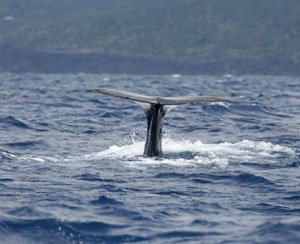
In 1986 the tide turned for the whale; however political the decision may have been, the application of the ban on whaling meant that with a few exceptions (Japan, Iceland and Norway) the depleted and endangered cetaceans were given a stay of execution.
However critical we may have been of the nations involved in whaling (including yours truly for Greenpeace), there were gaps left for the communities and in some the birth of whale-watching started anew and in lots of ways was a more profitable way of supporting the community.
This brings us to the Azores where nothing seems to have changed in the last century and the infrastructure which supported the whaling industry pretty much still exists and instead of using the lookout towers (vagias) to spot the whales for whaling the towers are now used to spot the cetaceans and radio through the locations to the whale-watching boats.
Found in the North Atlantic 1,500km west of Lisbon and 1,900km southeast of Newfoundland, the Azores are an archipelago of nine volcanic islands which lie on the whale migratory motorway from the south to the north. In the spring, the baleen whales visit the archipelago and this is what brought us to Pico Island in May 2013.
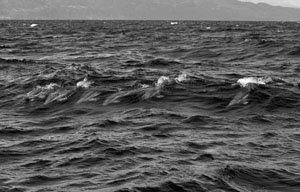
The industry of wildlife photography is becoming more difficult and niches are harder to find in the business. Two years ago we decided to try to put together a portfolio of cetaceans. We soon realised that attempting to put together a portfolio of images of whales and dolphins was like trying to photograph a pack of lions which never leave the long grass.
Seven days in paradise yielded one of the best weeks in years from the island. In the middle of the North Atlantic, half way between Portugal and North America, the weather in the Azores is notorious. However, when it all comes together these islands deliver in a big way. In six days we managed eight boat trips and put together a species list that could have taken years to accumulate.
Photography
From a photographic point of view this is quite a rough game. The boats are very fast RIBS and with calls coming in for new locations from the lookouts, relocation is a regular thing. One minute you are static and the next minute you are heading 10 miles out in a rough sea. Forget the idea that you may be in a calm sea most of the time it is choppy and you can spend a lot of the time bouncing from wave to wave. The truth of the matter is that there is a lot of action and a lot of sea spray, there is not much chance to change lenses and with the subject either landing in your lap or on the horizon, a couple of zooms with one up to about 400mm is ideal. I took a couple of full-frame bodies and stuck a 70-200 2.8 L on one and a 70-300 L lens on the other. Ideally I could have done with one being a little longer but when shooting dolphins you need a very fast focusing lens which also has good weather sealing and which is easy to wield around a leaping boat.
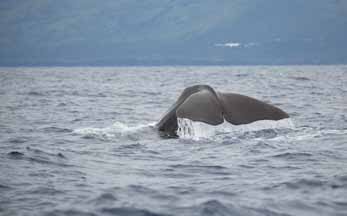
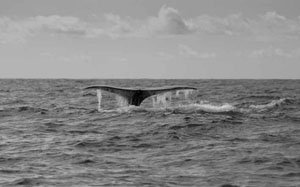
Photographic opportunities with the big whales vary with the species and of the three that we saw only one gave the iconic image of the tail fluke showing when diving. Only 18% of blue whales show the tail fluke when they dive, so putting together a portfolio of usable images for the big species is not that easy. Other species such as humpbacks spend more time on the surface but are best seen on the east coast of North America.
In the long run if you are going to specialise in big whales you need to spend time underwater in their own environment to complete the portfolio but there is still a lot of work you can do on the surface. Dolphins on the other hand are a lot more user friendly but expect to spend a lot of hours and wasted data to capture that one image that you are looking for.
The outfit that we used are called the 'Dolphin and Whale Connection' based in Brighton (www.dolphinconnectionexperience.com) who use a firm called Espaco Telassa (www.espacotalassa.com) The boats are excellent and the team who run them are knowledgeable and very professional. The owner, Serge, runs a hotel on the harbour next to the headquarters for the whale operation which can be booked through the UK operator.
The Tick List
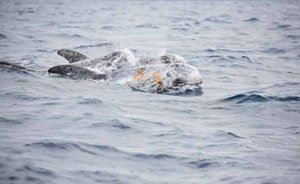
Two BLUE WHALES, five FIN WHALES, 20 encounters with SPERM WHALES with 15 on one day, one pod of between 40 and 50 FALSE KILLER WHALES (Pseudorca), two encounters with SHORT-FINNED PILOT WHALES, three encounters with pods of RISSO'S DOLPHIN, two encounters with STRIPED DOLPHIN, daily encounters with COMMON DOLPHIN, daily encounters with BOTTLENOSE DOLPHIN, one SUN FISH (Mola mola) approx two metres height, two LEATHERBACK TURTLES (Caretta caretta), FLYING FISH.

B.P.P.A. LIMITED
The Society of International Nature and Wildlife Photographers (SINWP)
Clwyd Chambers, Clwyd Street, Rhyl, Denbighshire, LL18 3LA, UK
Company Reg 0392 2894 | VAT number 790 4289 05
Tel: 01745 356935
Corporate Partners


Newsletter: Subscribe here
SINWP Bird Photographer of the Year
London Photography & Video Show - Europe's Largest 'All-Welcome' Photographic Convention | Partner Societies | Privacy