

articles/Owls/mysteryowls
Mystery, Superstition and Imagination Ashton's Owls
by Jon Ashton
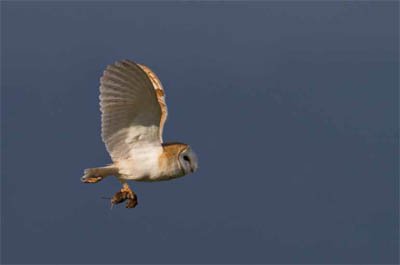
Mystery and superstition have long been associated with the owl; mankind has always been suspicious of the owls because of his fear of darkness and those things that might lurk within. In many cultures, the hooting of an owl is taken as an omen of death or bad fortune, and it may even prophesise death - most people die at night, and for that reason the owl has been seen as the messenger of death. In the Old Testament the owl is an unclean creature that stands alone as a figure of desolation. For Christians the owl traditionally signifies the Devil, powers of evil, bad news, and destruction; in the Middle East, China and Japan, the owl is considered as both a bad omen and an evil spirit. Similarly, in an Australian aboriginal myth the owl is the messenger of bad news. Yama, the Verdic God of Death, sometimes sent out the owl as his emissary.
Wisdom has been equally associated with the owl: "The owl can see that which others cannot, which is the essence of true wisdom. Where others are deceived, owl sees and knows what is there".
More recently the owl has been popularised through modern literature and film-making; in Harry Potter, Hedwig is the white, snowy owl that Hagrid gives Harry for his eleventh birthday. Owls are magical creatures most often used for delivering post and parcels in the wizarding world. They are known for their speed and discretion and can find recipients without an address (not used by the GPO then - Ed.)
A brief overview of owls
Most owls are active at dusk and dawn, spending the daytime at a quiet, inconspicuous roost. They generally roost singly or in pairs, but may form flocks outside of the breeding season. (A group of owls is called a parliament.) The short-eared owl and barn owl may be seen hunting during daylight, the latter more usually in late afternoon. In the UK they breed primarily in northern England and Scotland, but are seen more widely in winter. According to the RSPB, "Short-eared owls are best looked for in winter on coastal marshes and wetlands. However, birdwatchers must be careful to avoid disturbance at communal roost sites."

Luckily for me, Wirral peninsula in northwest England is well known for winter visiting short-eared owls; they are most readily seen from the coast line running from Burton to Heswall, there are also small numbers of resident barn owls, little owls and tawny owls present in the farmland and woodland thought the rest of Wirral. An owl's typical daily activity begins with preening, stretching, yawning and combing its head with its claws. The plumage is often ruffled up, and claws and toes are cleaned by nibbling with the beak. The owl will then leave its roost, sometimes giving a call (especially in breeding season). When relaxed, the plumage is loose and fluffy. If an owl becomes alarmed, it will become slim, its feathers pulled in tightly to the body, and ear-tufts, if any, will stand straight up
Owls have a very expressive body language. Many species will bob and weave their head, as if curious about something - this is to improve their three-dimensional concept of what they are viewing. When protecting young or defending itself, an owl may assume a 'threat' or defensive posture, with feathers ruffled to increase apparent size. The head may be lowered, and wings spread out and pointing down. Some species become quite aggressive when nesting, and have been known to attack humans.
Owls have a very wide range of vocalisations, ranging from the hoots to whistles, screeches, screams and hisses. Hooting is often territorial, and is also associated with courting, the male usually having the lower pitched hoot. It should be noted that not all owl species hoot. The "towit towoo" sound we often associate with owls is the usually the call of the tawny owl - the male and female responding to each other. Owls can also make clicking noises with their tongues, often as part of a threat display. They may also clap their wings in flight as part of a mating display, this is often seen in short-eared owls.
Because owls are predators, they are feared by many birds. For this reason, they are often attacked or harassed by groups of smaller birds. This is not limited to one species as, once the attack begins, many different birds will join in. Owls rarely responds to the harassment and consequently it is rare for the owl to be injured.
An owl's diet includes invertebrates (such as insects, spiders, earthworms, snails and crabs), fish, reptiles, amphibians, birds and small mammals. All owls are equipped with special adaptations that make them efficient predators. Keen eyesight allows them to locate quarry even on dim nights. Sensitive, directional hearing (hence the facial disc) helps locate concealed prey. An owl's flight is silenced by special wing feathers, which muffle the sound of the air rushing over the surface of the wing. This allows an owl to hunt by stealth, taking their victims by surprise. It also allows the owl to listen for prey movements while still flying.
The short-eared owl typically flies low, flapping and gliding, and may simply drop on the target, opening the wings at the last moment. Once caught, smaller prey is carried away in the bill, or eaten immediately. Owls cannot chew their food; small prey items are swallowed whole, while larger prey are torn into smaller pieces before being swallowed.

Unlike other birds, owls have no crop. A crop is a loose sac in the throat that serves as storage for food for later consumption. Since an owl lacks this, food is passed directly into their digestive system. A bird's stomach has two parts, the first part is the glandular stomach, where enzymes, acids, and mucus begin the process of digestion. The second part is the gizzard. There are no digestive glands in the gizzard and, in birds of prey, it serves as a filter, holding back insoluble items such as bones, fur, teeth and feathers. The soluble, or soft parts of the food are ground by muscular contractions, and allowed to pass through to the rest of the digestive system, which includes the small and large intestine. Several hours after eating, the indigestible fur, bones, teeth and feathers that are still in the gizzard are compressed into a pellet the same shape as the gizzard.
This pellet travels up from the gizzard back to the proventriculus (glandular part of the stomach). It will remain there for up to 10 hours before being regurgitated and because the stored pellet partially blocks the owl's digestive system, new prey cannot be swallowed until the pellet is ejected. When an owl is about to produce a pellet, it makes for an interesting sight - the eyes are closed, the facial discs narrow, the neck is stretched up and forward, the beak is opened, and without any retching or spitting movements the pellet drops out. Owl pellets differ from other birds of prey; they contain a greater proportion of food residue, an owl's digestive juices are less acidic than in other birds of prey. Also, other raptors tend to pluck their prey to a much larger extent than owls.
One of an owl's most striking features is its eyes. Large and forward facing, they may account for one to five per cent of the owl's body weight, depending on species. The forward facing position of the eyes that give an owl its 'wise' appearance, also give it a wide range of binocular vision. This means the owl can see objects in three dimensions (height, width, and depth), and can judge distances in a similar way to humans. The field of view for an owl is about 110 degrees, with about 70 degrees being binocular vision. By comparison, humans have a field of view that covers 180 degrees, with 140 degrees being binocular. An owl's eyes are large in order to improve their efficiency, especially under low light conditions, the eyes are so well developed, that they are not eye-balls as such, but elongated tubes. They are held in place by bony structures in the skull called sclerotic rings. For this reason, an owl cannot 'roll' or move its eyes - it can only look straight ahead, hence the need for owls to keep moving their heads. They are able to achieve this by having a long and very flexible neck, which is not always apparent, as it is hidden by feathers and the owl's posture. An owl's neck has 14 vertebrae, which is twice as many as humans. This allows it to turn its head through a range of 270 degrees, measured from a forward facing position.

Owls are territorial, a characteristic that is particularly evident during the breeding season. They vigorously defend the nest and a well-defined, surrounding feeding territory, against members of the same species and other birds that might conceivably compete for the same resources. If the owls are dispersive, this territoriality lasts only for the duration of the breeding season. Owl pairs may remain together throughout the year. Owls do not construct nests as such, instead they are opportunistic nesters, using ready-made sites or taking over the abandoned nests of other birds. Owl species that breed in open terrain are often ground nesters. Short-eared owls often nest in or beside tussocks of grass; similar sites are sometimes chosen (on rare occasions) by long-eared owls and tawny owls, both are more usually treenesting species. Holes in trees are another preferred site for a wide variety of owls, and a few species, notably the barn owl, have adopted the man-made equivalent of these sites - namely, holes in barns and other outbuildings. The abandoned nests of crows and birds of prey are also favoured by many owl species, with sometimes little or no attempt to embellish the previous owner's construction. Lastly, natural rock crevices or ledges are used by a few species, including the eagle owl which has recently retaken residence in the UK. Owls will generally try to reoccupy the same nesting territories in consecutive years.
Photographic Technique
As always, I would like to reinforce the good nature photographer's code, ie the welfare of the animal is always paramount to that of the photographer. Never, ever, cause your subject distress by disturbing it or in this case inhibiting its flight path. When the bird flies it is for good reason and that usually is to find food; this costs the bird time and energy, and these are valuable assets to the bird. Disturbance will hinder the bird's capability to hunt and will waste valuable energy resource. The following comments are made primarily with regard to 'BIF' shots, ie 'Birds In Flight Shot' in mind. The photographer must at all times be alert and ready, ready to take images with ideal camera and lens settings. This is a pretty obvious statement but it is often easier said than done due to changing light conditions and changing flight direction.
The Weather
We have to take what we are given and maximise our chances; having said that it is a good idea to know when you are going to be totally unsuccessful. It is pointless trying to capture images of a short-eared owl flying over Burton marshes (or any other marshes or open fields) if the weather is not suited to bird flight. Owls do not like flying in the ain and will only do so if it is absolutely necessary, the same goes for snow. Equally, if there is a strong wind the owls find it difficult to hunt, not only because flying and manoeuvring is more difficult, but also because they will be unable to hear and accurately locate prey in the grasses due to wind noise.

In an ideal world we would have good, but not harsh light, there would be a high tide to push rodents (and hence any owls) towards the shore line and there would be a light breeze blowing landward. If we were really lucky it would also not be too cold either (this is, however, purely for the comfort of the photographer!)
The Tripod
I would recommend using a tripod under all circumstances regardless of lens length, unless there was a compelling reason not to do so.
Hand-holding a 500mm lens (or bigger) is possible and practical but it is not over a sustained length of time; your arms will tire and you will find it difficult to keep the lens steady - I guarantee! I would recommend using a tripod and a gimbal head of some kind; certain ball and socket heads work with big lenses but most result in the lens flopping over as the ball becomes loose in the socket. I place the tripod so that the camera eye-piece is just below eye height and when panning I brace myself so that my head is pushing against the camera eye piece and my left arm is on the lens or holding the gimbal head, this way vibrations are reduced and it makes for smooth panning.
The Lens
A telephoto or long zoom lens will definitely be required; it obviously depends upon how big an owl is and how close it will fly to the photographer but I would suggest a 400mm lens is going to prove an absolute minimum. A prime lens will focus more quickly than a zoom lens and any lens without a supplementary Tele Converter/Extension Lens will focus more quickly than one with. I use a Canon 500mm LIS f4 lens, and only if necessary do I fit a 1.4 teleconverter. The aperture selection will very much depend upon the light and how close you are likely to be to the subject; the closer the bird you will need a smaller aperture, the further away a larger aperture will be ok - this is because depth of field is directly related to magnification - the closer the bird, the greater the magnification.
The Camera
Most photographers will be contemplating using an SLR digital camera; it matters little if it is a full frame or a crop frame camera, provided a reasonable sized image can be captured. The most important aspects to be constantly aware of are settings that may require adjusting to track changing light or changing light direction relative to the flight of the owl.
If the light is at the rear of the owl, for example, the meter setting will need to be altered to that if the light was lateral or to the front of the owl.
The photographer has a choice, either be aware of the need to over- or under-expose, or consider setting the camera to manual mode. If the light is constant and the sun is not continuously being shielded and unshielded by clouds, then Av mode metering may prove the better option, just bare in mind the need to over- or under-expose the subject relative to the surroundings. I always set my camera to Evaluative Metering and I usually use Av mode. If I am photographing a short-eared owl flying over marshes then, depending upon light direction, I would start off assuming that the bird would have a similar luminosity to the dried grass stems.
If the owl was against a bright blue sky then I would of course need to increase exposure. When I arrive at the scene one of the first things I would do would be to take a few shots of the surroundings and check the histogram, ensuring I was 'shooting to the right'. I would then know instinctively if I had to over- or under-expose the subject according to its position in the frame. I would select an ISO setting that would provide a little leeway for adjustment, eg one that would permit 1/1000sec or 1/800 sec. Slower shutter speeds are possible but the hit rate will be appreciably lower. I recognise of course that sometimes it may be a conscious decision to select a slow shutter speed to demonstrate movement, but in general a pin-sharp head is what is required.

Ideally you would be taking images with the sun behind you and the background would provide sufficient contrast between itself and the owl thus making for easy or ready focusing. Unfortunately this rarely happens, we have to set the camera accordingly. Now we have to consider focus mode and focus point selection(s), here I am referring to the Canon 7D but I am sure you will be able to relate to your own particular camera. I usually choose AF point expansion (Manual selection); this means I use the centre point focusing point and select the mode that permits the immediate, adjacent points to focus. My logic for this selection is that I have selected the most sensitive focal point and expanded it by incorporating the immediate points. There is a certain logic that may indicate just use the single point thus giving the camera less to think about but I tend to go for the expansion because I cannot guarantee to keep the bird smack in the middle of the frame and the adjacent points may for example pick up the wings or tail which may have otherwise been missed. If the bird was going to be against a perfectly clear background, eg the sky, then I would use Zone AF manual selection of the centre zone. If your camera does not have a number of options such as this then I would advise use of the single central focus point. The focus mode would of course be set to Servo Mode - ie Continuous Focus or Predictive Focus mode. I tend not to use the focusing aid that prevents the camera from focus searching when the subject is considerably out of focus as it can be very irritating if you lose track of the bird and pick it up again when it is significantly closer - the camera will not focus under these circumstances. I would, however, use this facility if, say, I was in a boat gently bobbing up and down and there was a bird perched on the branch of a tree; here the lens would move but the subject would not and the focus would immediately snap in as soon as you were back on the bird.
Focusing is a tricky business, it takes practice and skill to keep track of an owl in flight. To minimise battery consumption (and this applies especially in cold weather), I use a technique referred to as 'focus bumping'. This is an informal phrase adopted by American photographers; once you acquire initial focus keep the bird in the frame but do not keep your finger/thumb on the button responsible for focusing, rather just blip it every now and again to maintain approximate focus and, of course, when you sense the time is right to take images then keep your finger/thumb on the button.
Some photographers strongly advocate using Custom Functions to set one of the rear buttons on the camera to focus and just have the shutter button available to fire the shutter; many top photographers do this but it does take some getting used to and owl photography is not the place to start! I would only recommend this if you are already used to this set-up as, initially, it is counterintuitive. I have my camera set so that the shutter controls focus and shutter operation, I set one of the rear buttons to stop focus should the need arise - this mimics 'one shot' focus mode.
You will appreciate there is an appreciable number of factors to contend with in order to get a well focused owl image. Maybe you would wish for some owl shots (they are after all beautiful creatures), but maybe you would prefer to cut your teeth as it were on something a little more straightforward. Well luck y for you there are alternatives. There are a number of bird photography workshops available and the Societies is due to start its own under the tutoring of Ron Thomas and John Fairclough (see Societies' News section).
On workshops such as these it is possible to refine your skills in regard to focusing, exposure and composition. After this of course you have ample opportunity to refine your Photoshop skills in cloning, patching and healing.

B.P.P.A. LIMITED
The Society of International Nature and Wildlife Photographers (SINWP)
Clwyd Chambers, Clwyd Street, Rhyl, Denbighshire, LL18 3LA, UK
Company Reg 0392 2894 | VAT number 790 4289 05
Tel: 01745 356935
Corporate Partners


Newsletter: Subscribe here
SINWP Bird Photographer of the Year
London Photography & Video Show - Europe's Largest 'All-Welcome' Photographic Convention | Partner Societies | Privacy