

articles/Nature/macrocloseuplook
Macro Photography - A close-up look
by
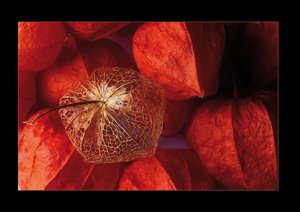
The talk at the Convention will provide advice and some in depth technical information on the equipment and techniques needed to explore the wonderful world of miniature, using the eye of a Macro Photographer.
Introduction
Definitions.
Macro photography basically means getting close enough so that the subject or object being photographed is approaching life sized and beyond. In practical terms this means for example if an object is 1cm in height then it will be 1cm on the film plane or sensor plane.
Challenges.
The challenges involved in macro photography can be looked at under two broad categories.
1. The aesthetic/composition
2. The technical issues
The aesthetic requires one to capture the uniqueness of the flower or insect being photographed while knowing exactly what to include or exclude in the frame, to achieve this. The technical side requires the photographer to understand the technical limitations and strengths of camera, lenses and media used to capture the photograph.
Overall the macro photographer is able to work in a technical environment and still be able to produce a beautiful macro photograph that will satisfy the viewer on an aesthetic level.
Close-up filters lenses
These lenses are basically single- or dual-mounted lenses that screw into a lens filter thread giving an effect of magnification. The theory is that they allow the photographer to focus closer by shortening the effective focal length of the attached lens. However, you lose the ability to focus to infinity, and optically they are not as good as other methods of magnification. Sometimes they are called 'Dioptre lenses' and come in various strengths.
Extension Rings or Tubes
These are hollow tubes that fit between the lens and camera body. They effectively increase the distance between the lens and film/sensor, and in doing so increase the magnification value. Some advantages are that there are no additional optics so definition is high; also the cost is relatively low when compared to more sophisticated specialist lenses. However, the ability to focus to infinity is again lost, and exposure times are increased due to the loss of effective aperture.
They can be purchased singly or as a set and they can be used in combination
The amount of magnification can be worked out using this equation.
Mag. = Extension ÷ Focal length of lens.
There is a lot more that can be said about extension rings/tubes, but there is simply not enough room for it here.
Reversing Rings

The reversing ring allows you to mount a lens directly onto a camera or extension tubes or bellows, but in reverse. If you consider a standard lens for example, the design of the lens is to take a scene smaller to fit on film or sensor; however, in reverse it will magnify the scene.
Although it's an affordable way to get macro shots, it's a bit difficult to control in the field, and there are coupling issues to contend with due to the loss of your automatic diaphragm.
Macro Lenses
Macro lenses allow you to focus closer to the object either by increasing the lens to film/sensor distance physically or by achieving this using clever optical design. They usually give life size magnification that is 1:1 magnification
These lenses are highly corrected, using new technologies with internal focusing and floating lens elements. In short this gives you sharp images without the need for additional lens extension using tubes.
Bellows
Bellows can achieve large magnifications, because they work like a large, but fully adjustable, extension rings or tubes. They are, however, very awkward, fragile and slow to operate and really should only be used in the studio. Earlier ones also lost automation and would need Z rings and double cable releases for ease of use. However, to achieve really large magnification ratios between 2:1 and 10:1 then they come into their own.
Shown here are some Nikon bellows with bellow extension.
Stacking Lenses
This was a practice used to get high magnification ratios over a decade and a half ago. It involves mounting two lenses together using special mounting rings. The images using this method sometimes suffered from distortions and vignette but the better combinations actually performed quite well. But it was an affordable way to get good magnifications ratios and the reversed lens acted like a dioptre close-up lens.
Focusing Rails and Tripods
There can be a problem when you are working at high magnifications and you focus with the focus ring - what you are actually doing is changing the magnification. This will in turn change your overall composition. One way around this is to fix your camera on rails and set your magnification. Then to get a sharp image you move the whole lens and camera combination. This is a very accurate way to focus.
As far as tripods are concerned, in my opinion anyway, always use them no matter what. I know Nikon have redesigned the Micro 105mm with VR technology but at high magnifications the tripod is a real benefit.
I personally like using three-way pan heads on tripods and with few and very secure linkages. I will talk more on this topic at the Convention.

By Michael Hayes
Lighting and Exposure
Determining Correct Exposure.
All modern 35mm cameras have very reliable metering systems in them. So if shooting transparencies always bracket the exposure and choose from the Matrix, Center weighted or Spot metering. When using non-metered cameras such as the Bronica or the Mamiya, I love and fully trust a Sekonic hand-held meter.
When shooting digital, you can easily check your histogram, but I always shoot JPEG and RAW files simultaneously.
Natural Light
We must know how to control natural light falling on our small objects. The human eye can see a much higher contrast range than film or digital sensors. But if you are not careful, what looks great to your eye, on film or sensor there can be blown highlights and shadows with no details. So we must modify the light and compress the contrast by using light modifiers such as reflectors and diffusers.
The reflectors I use are some of Lastolite, foldable ones, or just cardboard covered with white paper or crumpled tinfoil depending on the effect required, and the size of the object.
Studio Lighting
I love using studio flash whenever I can but the intense output of studio flash units must be fully controlled. Here just like in portraiture we can use umbrellas and soft boxes although the scale can be much smaller.
Another useful light modifier is the light cube. The monoblocks are positioned outside the cube, where the Light Cube material itself acts like a diffuser.
Flash
in my opinion flash is absolutely essential when working with macro photography. It can be used either as a main source of illumination or as a fill.
When thinking about flash it's useful to look at options available.
Studio flash I have touched on already, other than that there is:
· Off-camera flash, triggered either by cable or remotely.
· Ring flash, triggered either by cable or again remotely.

B.P.P.A. LIMITED
The Society of International Nature and Wildlife Photographers (SINWP)
Clwyd Chambers, Clwyd Street, Rhyl, Denbighshire, LL18 3LA, UK
Company Reg 0392 2894 | VAT number 790 4289 05
Tel: 01745 356935
Corporate Partners


Newsletter: Subscribe here
SINWP Bird Photographer of the Year
London Photography & Video Show - Europe's Largest 'All-Welcome' Photographic Convention | Partner Societies | Privacy